Showing posts with label World War II. Show all posts

Wednesday, November 4, 2015

Shadow Divers

Shadow Divers: The True Adventure of Two Americans Who Risked Everything to Solve One of the Last Mysteries of World War II
by Robert Kurson

In the tradition of Jon Krakauer’s Into Thin Air and Sebastian Junger’s The Perfect Storm comes a true tale of riveting adventure in which two weekend scuba divers risk everything to solve a great historical mystery–and make history themselves.

For John Chatterton and Richie Kohler, deep wreck diving was more than a sport. Testing themselves against treacherous currents, braving depths that induced hallucinatory effects, navigating through wreckage as perilous as a minefield, they pushed themselves to their limits and beyond, brushing against death more than once in the rusting hulks of sunken ships.
But in the fall of 1991, not even these courageous divers were prepared for what they found 230 feet below the surface, in the frigid Atlantic waters sixty miles off the coast of New Jersey: a World War II German U-boat, its ruined interior a macabre wasteland of twisted metal, tangled wires, and human bones–all buried under decades of accumulated sediment.
No identifying marks were visible on the submarine or the few artifacts brought to the surface. No historian, expert, or government had a clue as to which U-boat the men had found. In fact, the official records all agreed that there simply could not be a sunken U-boat and crew at that location.

Over the next six years, an elite team of divers embarked on a quest to solve the mystery. Some of them would not live to see its end. Chatterton and Kohler, at first bitter rivals, would be drawn into a friendship that deepened to an almost mystical sense of brotherhood with each other and with the drowned U-boat sailors–former enemies of their country. As the men’s marriages frayed under the pressure of a shared obsession, their dives grew more daring, and each realized that he was hunting more than the identities of a lost U-boat and its nameless crew.

Author Robert Kurson’s account of this quest is at once thrilling and emotionally complex, and it is written with a vivid sense of what divers actually experience when they meet the dangers of the ocean’s underworld. The story of Shadow Divers often seems too amazing to be true, but it all happened, two hundred thirty feet down, in the deep blue sea.

Wednesday, February 20, 2013

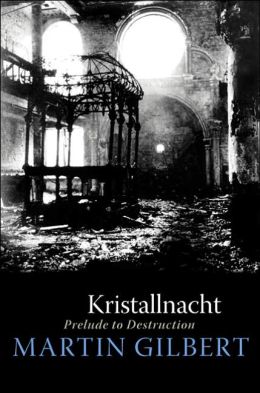
Kristallnacht

Kristallnacht: Prelude to Destruction
by Martin Gilbert

 In the early hours of November 10, 1938, Nazi storm troopers and Hitler Youth rampaged through Jewish neighborhoods across Germany, leaving behind them a horrifying trail of terror and destruction. More than a thousand synagogues and many thousands of Jewish shops were destroyed, while thirty thousand Jews were rounded up and sent to concentration camps. Kristallnacht—the Night of Broken Glass—was a decisive stage in the systematic eradication of a people who traced their origins in Germany to Roman times and was a sinister forewarning of the Holocaust.

 With rare insight and acumen, Martin Gilbert examines this night and day of terror, presenting readers with a meticulously researched, masterfully written, and eye-opening study of one of the darkest chapters in human history.

Tuesday, October 16, 2012

White Flash/Black Rain

White Flash/Black Rain: Women of Japan Relive the Bomb 
edited by Vance-Watkins & Aratani 

 White Flash/Black Rain: Women Of Japan Relive The Bomb speaks of the shared accountability for bringing about war, any war. These women bear witness not only to the unspeakable mass destruction unleashed by the United States when it dropped the bomb, but also of the disastrous path Japan followed with its policy of conquest and Emperorism in Korea and China, and the abuse of the "comfort women" used by Japanese soldiers. White Flash/Black Rain is a book of peace. These women tell their stories in hope that what happened at Hiroshima and Nagasaki will never happen again.

Wednesday, October 10, 2012

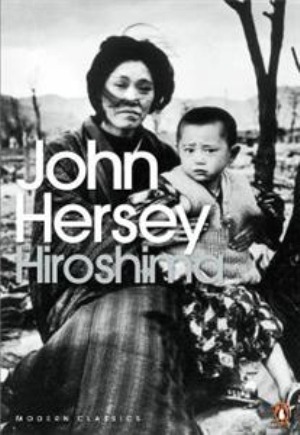
Hiroshima

Hiroshima
by John Hersey

On August 6, 1945, Hiroshima was destroyed by the first atom bomb ever dropped on a city. This book, John Hersey's journalistic masterpiece, tells what happened on that day. Told through the memories of survivors, this timeless, powerful and compassionate document has become a classic "that stirs the conscience of humanity" (The New York Times).

Almost four decades after the original publication of this celebrated book, John Hersey went back to Hiroshima in search of the people whose stories he had told.  His account of what he discovered about them is now the eloquent and moving final chapter of Hiroshima.

Sunday, April 15, 2012

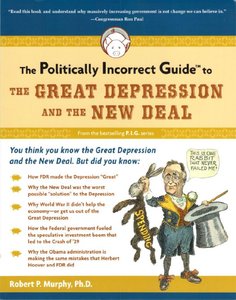
The Great Depression and The New Deal

The Politically Incorrect Guide to The Great Depression and The New Deal
by Robert P. Murphy

In this timely new P.I. Guide, Murphy reveals the stark truth: free market failure didn't cause the Great Depression and the New Deal didn't cure it. Shattering myths and politically correct lies, he tells why World War II didn t help the economy or get us out of the Great Depression; why it took FDR to make the Depression Great; and why Herbert Hoover was more like Obama and less like Bush than the liberal media would have you believe. Free-market believers and capitalists everywhere should have this on their bookshelf and in their briefcase.

We all learned in school that the 1920s were a time of unregulated capitalism that led to the stock market Crash of 1929 and the Great Depression of the 1930s. Herbert Hoover was a laissez-faire ideologue who did nothing to alleviate the crisis--even as citizens starved and were forced to live in "Hoovervilles." And the interventionist policies and massive spending programs of Franklin D. Roosevelt's New Deal gradually lifted us out of the Depression, until World War II brought it to a definitive end.
The only trouble with this official narrative--taught in most history textbooks, and proclaimed as gospel by the media--is that every element of it is false. Worse, this unsubstantiated myth is now being used to justify a "new New Deal" in response to today's economic crisis that could lead to a Greater Depression even deeper and longer than the first. But in The Politically Incorrect Guide to the Great Depression and the New Deal, economist Robert Murphy fact-checks the myths, shows why they're wrong, and delves deep into history to set the record straight. His "politically incorrect" conclusion? It was government, not free markets, that caused the Great Depression--and the New Deal only made it worse. The real "lessons of the Great Depression" are not what you've been taught.

* The Crash of `29 was caused not by capitalism, but by the boom brought on by the newly created Federal Reserve's easy money policy (sound familiar?)
* Hoover made the Depression "Great" precisely by abandoning the laissez-faire approach that previous presidents had followed and that kept depressions short
* The bank runs of the 1930s were caused by government intervention in the banking system
* Government efforts to prop up wages and prices led to a full decade of double-digit unemployment
* FDR's arbitrary policies toward businessmen resulted in net investment of less than zero for much of the Depression

Tuesday, June 28, 2011

Here Is Your War

Here Is Your Warby Ernie Pyle

A wonderful and enduring tribute to American troops in the Second World War, Here Is Your War is Ernie Pyle’s story of the soldiers’ first campaign against the enemy in North Africa. With unequaled humanity and insight, Pyle tells how people from a cross-section of America—ranches, inner cities, small mountain farms, and college towns—learned to fight a war. The Allied campaign and ultimate victory in North Africa was built on blood, brave deeds, sacrifice and needless loss, exotic vistas, endurance, homesickness, and an unmistakable American sense of humor. It’s all here—the suspenseful landing at Oran; the risks taken daily by fighter and bomber pilots; grim, unrelenting combat in the desert and mountains of Tunisia; a ferocious tank battle that ended in defeat for the inexperienced Americans; and the final victory at Tunis. Pyle’s keen observations relate the full story of ordinary G.I.s caught up in extraordinary times.

Sunday, July 4, 2010

The Greatest Generation

The Greatest Generation
by Tom Brokaw

In this superb audiobook, Tom Brokaw goes out into America to tell - through the stories of individual men and women - the story of a generation, American's citizen heroes and heroines who came of age during the Great Depression and the Second World War and went on to bud modern America.

Tom Brokaw, a native of South Dakota, graduated from the University of South Dakota with a degree in political science. He began his journalism career in Omaha and Atlanta before joining NBC News in 1966. Brokaw was the White House correspondent for NBC News during Watergate, and from 1976 to 1981 he anchored Today on NBC. He's been the sole anchor and managing editor of NBC Nightly News with Tom Brokaw since 1983. Brokaw has won every major award in broadcast journalism, including two DuPonts, a Peabody Award, and several Emmys. He lives in New York and Montana.

Thursday, June 24, 2010

Gulag Archipelago 1918-1956

Gulag Archipelago 1918-1956: An Experiment in Literary Investigation
by Aleksandr I. Solzhenitsyn
abridged by Edward E. Ericson

Solzhenitsyn's gripping epic masterpiece, the searing record of four decades of Soviet terror and oppression, in one abridged volume, authorized by the author.

After serving as a decorated captain in the Soviet Army during World War II, Aleksandr I. Solzhenitsyn (1918-2008) was sentenced to prison for eight years for criticizing Stalin and the Soviet government in private letters. Solzhenitsyn vaulted from unknown schoolteacher to internationally famous writer in 1962 with the publication of his novella One Day in the Life of Ivan Denisovich; he was awarded the Nobel Prize in Literature in 1968. The writer's increasingly vocal opposition to the regime resulted in another arrest, a charge of treason, and expulsion from the USSR in 1974, the year The Gulag Archipelago, his epic history of the Soviet prison system, first appeared in the West. For eighteen years, he and his family lived in Vermont. In 1994 he returned to Russia. Aleksandr Solzhenitsyn died at his home in Moscow in 2008.

Tuesday, June 23, 2009

Wilson's War


Wilson's War: How Woodrow Wilson's Great Blunder Led to Hitler, Lenin, Stalin, and World War II
by Jim Powell

The fateful blunder that radically altered the course of the twentieth century--and led to some of the most murderous dictators in history

President Woodrow Wilson famously rallied the United States to enter World War I by saying the nation had a duty to make "the world safe for democracy." But as historian Jim Powell demonstrates in this shocking reappraisal, Wilson actually made a horrible blunder by committing the United States to fight. Far from making the world safe for democracy, America's entry into the war opened the door to murderous tyrants and Communist rulers. No other president has had a hand--however unintentional--in so much destruction. That's why, Powell declares, "Wilson surely ranks as the worst president in American history."

Wilson's War reveals the horrifying consequences of our twenty-eighth president's fateful decision to enter the fray in Europe. It led to millions of additional casualties in a war that had ground to a stalemate. And even more disturbing were the long-term consequences--consequences that played out well after Wilson's death. Powell convincingly demonstrates that America's armed forces enabled the Allies to win a decisive victory they would not otherwise have won--thus enabling them to impose the draconian surrender terms on Germany that paved the way for Adolf Hitler's rise to power.

Powell also shows how Wilson's naivete and poor strategy allowed the Bolsheviks to seize power in Russia. Given a boost by Woodrow Wilson, Lenin embarked on a reign of terror that continued under Joseph Stalin. The result of Wilson's blunder was seventy years of Soviet Communism, during which time the Communist government murdered some sixty million people.

Sunday, November 9, 2008

Diary of a Young Girl

Diary of a Young Girl
by Anne Frank

Discovered in the attic in which she spent the last years of her life, Anne Frank's remarkable diary has since become a world classic -- a powerful reminder of the horrors of war and an eloquent testament to the human spirit. In 1942, with Nazis occupying Holland, a thirteen-year-old Jewish girl and her family fled their home in Amsterdam and went into hiding. For the next two years, until their whereabouts were betrayed to the Gestapo, they and another family lived cloistered in the "Secret Annex" of an old office building. Cut off from the outside world, they faced hunger, boredom, the constant cruelties of living in confined quarters, and the ever-present threat of discovery and death. In her diary Anne Frank recorded vivid impressions of her experiences during this period. By turns thoughtful, moving, and amusing, her account offers a fascinating commentary on human courage and frailty and a compelling self-portrait of a sensitive and spirited young woman whose promise was tragically cut short.

Thursday, August 28, 2008

Farewell to Manzanar

Farewell to Manzanar: A True Story of Japanese American Experience During and After the World War II Internment
by Jeanne Wakatsuki Houston

During World War II a community called Manzanar was hastily created in the high mountain desert country of California, east of the Sierras. Its purpose was to house thousands of Japanese American internees. One of the first families to arrive was the Wakatsukis, who were ordered to leave their fishing business in Long Beach and take with them only the belongings they could carry. For Jeanne Wakatsuki, a seven-year-old child, Manzanar became a way of life in which she struggled and adapted, observed and grew. For her father it was essentially the end of his life.

At age thirty-seven, Jeanne Wakatsuki Houston recalls life at Manzanar through the eyes of the child she was. She tells of her fear, confusion, and bewilderment as well as the dignity and great resourcefulness of people in oppressive and demeaning circumstances. Written with her husband, Jeanne delivers a powerful first-person account that reveals her search for the meaning of Manzanar.

Farewell to Manzanar has become a staple of curriculum in schools and on campuses across the country. Last year the San Francisco Chronicle named it one of the twentieth century's 100 best nonfiction books from west of the Rockies.